Glutathione is a naturally occurring tripeptide composed of glutamate, cysteine and glycine. Its redox chemistry has made it a longstanding subject of biochemical research.
That scientific importance does not remove the need to verify a commercial research material. Literature explains glutathione as a molecule and biological participant; product-specific records explain what a supplier is offering.
Begin with the material identity
A useful product record should specify the stated material, form, amount or format, lot identifier and supplier. Reviewers should confirm whether a document uses the same name and identifier as the label.
If a page uses a broad term such as “glutathione” without clarifying the offered material, ask for product-specific details before comparing results or price.
Understand why redox chemistry matters
Glutathione participates in oxidation-reduction processes and is often discussed in relation to cellular antioxidant systems. That makes oxidation state, material form, storage history and analytical scope relevant to research planning.
However, a general biochemical role is not a sales promise. Titan Core content should not convert a molecular function into a claim that its product will produce a health, beauty, performance or treatment outcome.
Match the test to the question
Review the analytical report for the exact question it addresses. Depending on the method and report, a buyer may investigate identity, chromatographic purity, concentration, water content or another defined attribute.
Ask:
- What method was used?
- What material or sample identifier was tested?
- What result and units were reported?
- What acceptance criterion, if any, was stated?
- Which important attributes were not evaluated?
The answer should come from the report, not from the visual design of the certificate.
Protect the chain from bottle to record
The strongest documentation is traceable to the item being considered. Compare the product page, label, lot number, certificate and order record. If the report is only an example, label it as an example.
Read Why lot-specific documentation matters for a complete evidence chain.
Ask handling questions without giving personal-use instructions
Qualified buyers may need supplier information about unopened storage, shipment, packaging, document retention and issue reporting. Those are product-handling and procurement questions.
This article intentionally does not provide reconstitution, administration, injection or dosing guidance. Research planning and laboratory handling should follow the buyer's approved protocol, safety review and institutional procedures.
Confirm current Titan Core status
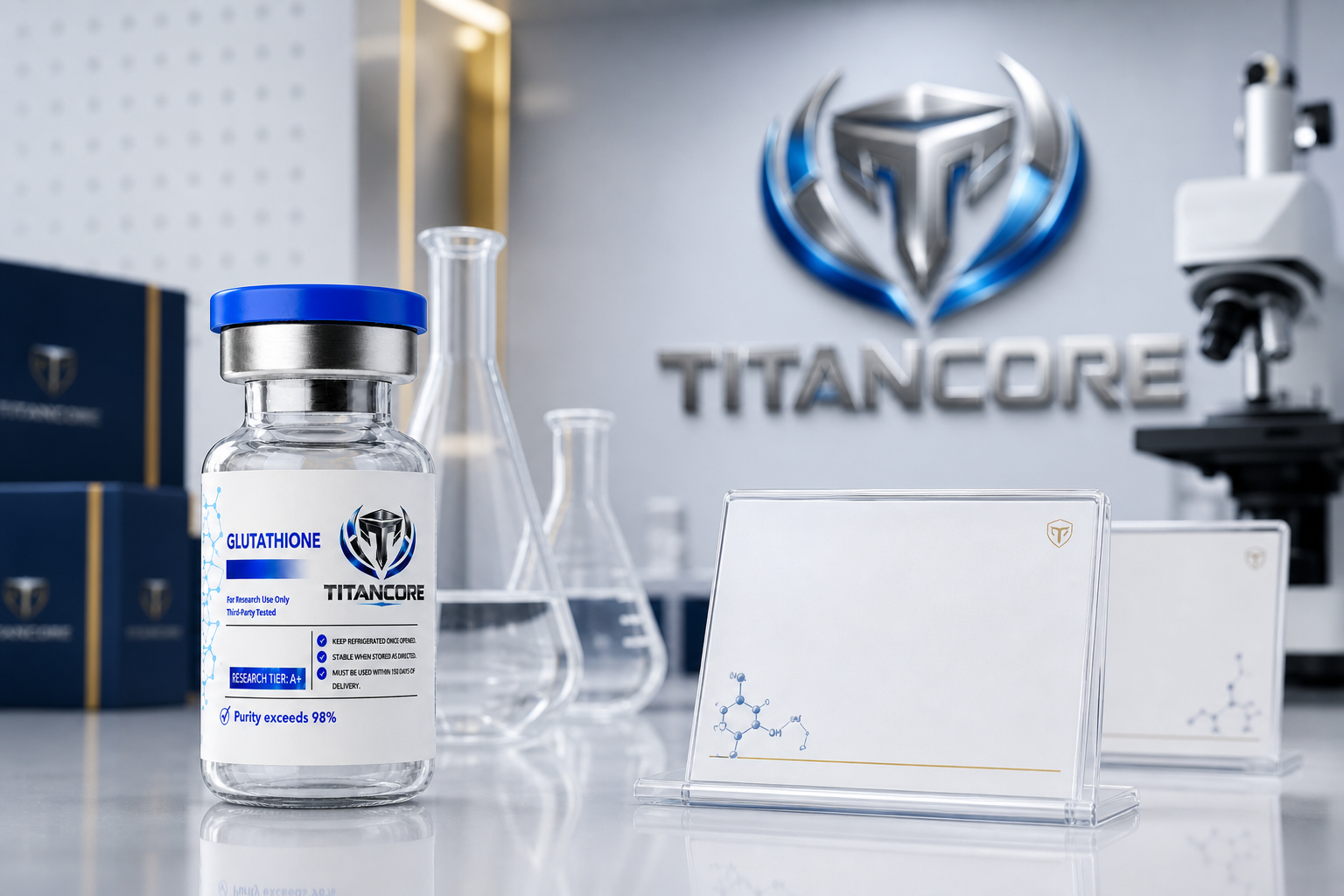
Titan Core's approved supporting assets include a branded Glutathione bottle. Before publication, the company should confirm whether the item is in the current catalog, which product URL applies, what label is current and which lot documents can be supplied.
Until those facts are confirmed, readers should contact Titan Core rather than rely on a historical image or promotion.
Seven questions before procurement
- What exact form and format are offered?
- Is the product page current?
- Which lot is expected to ship?
- Does the label match the report?
- Which attributes did the cited methods evaluate?
- What storage, shipping and issue-resolution facts apply?
- Is the proposed use approved by the buyer's institution?
Explore Titan Core responsibly
Visit Titan Core for current company information and use Contact for a product-specific question. For a broader comparison method, read How to compare research materials.
Sources and further reading
For research and laboratory context only. This article is not medical advice and does not support personal use.