
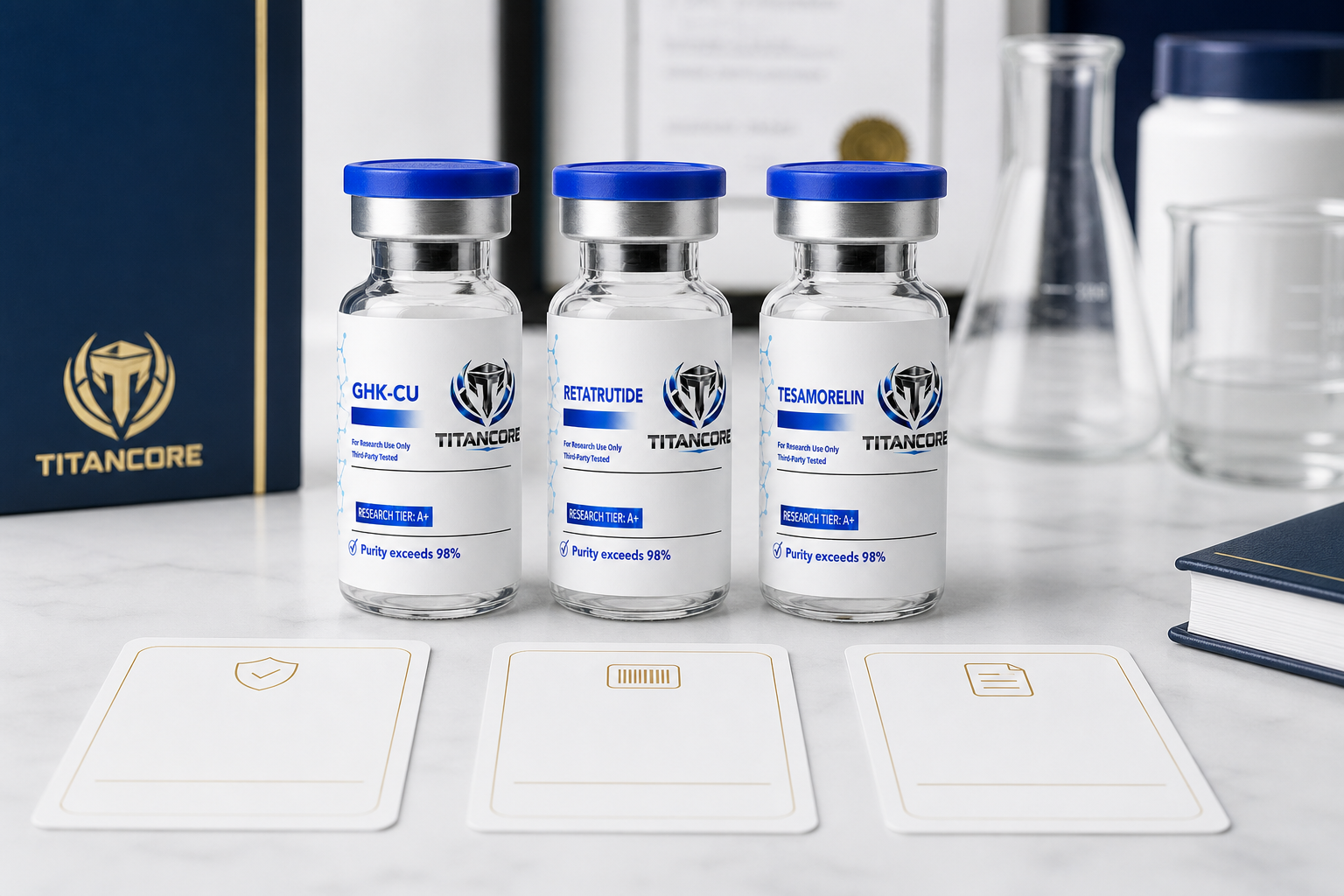
A useful comparison does not ask, “Which product has the biggest promise?” It asks, “Which option is clearly identified, appropriately documented and suitable for the approved research question?”
That shift protects buyers from five common distractions: dramatic claims, attractive packaging, a single purity percentage, copied scientific headlines and the lowest visible price.
Compare identity before benefits
Start with what each item claims to be. Capture:
- exact name and any identifier;
- form and stated amount;
- catalog or SKU reference;
- supplier and product URL;
- lot or batch expected; and
- research-only or other restrictions.
If two pages describe different forms or formats, they are not direct equivalents. Normalize the facts before comparing cost or availability.
Compare evidence by scope
List each report and the question it answers. A chromatographic result, a mass result, a composition report and a sterility-related report have different purposes.
Use a table such as:
| Question | Product A evidence | Product B evidence | Gap to resolve | |---|---|---|---| | Stated identity | Report and method | Marketing statement only | Request report | | Chromatographic purity | Lot-linked result | Example result | Confirm current lot | | Label-to-lot link | Clear | Missing | Request label image | | Document date/status | Current | Unclear | Verify revision |
The goal is not to reward the supplier with the most documents. It is to identify which relevant questions have readable, current and connected evidence.
Compare lot traceability
Strong traceability connects the product page, bottle label, order record and analytical document. Ask whether the report applies to the lot expected to ship. If the answer is no, treat it as an example rather than current product evidence.
The labels, lots and traceability guide explains the connection in detail.
Compare the information experience
Product quality cannot be inferred from website polish, but clarity is still commercially important. Evaluate whether the supplier:
- maintains stable product routes;
- uses readable labels and documents;
- distinguishes current from example records;
- answers documentation questions;
- publishes terms and support routes; and
- corrects discrepancies visibly.
For Titan Core, this is an active growth priority. At the 14 August 2026 audit, featured product links redirected to the homepage. Those routes must be repaired before product-led articles are released.
Compare service, not just response speed
A fast reply that avoids the question is less useful than a precise reply that names the product, lot, record and next action. Test the support experience with one clear request, such as:
“Please provide the current lot identifier and the matching analytical record for the item shown at this URL.”
Record the completeness and consistency of the answer.
Compare commercial fit
Price belongs in the decision, but it should be assessed with:
- current availability;
- unit format;
- shipping destination and timing;
- replacement and discrepancy process;
- documentation access; and
- internal review cost.
A lower price can become expensive if the buyer must chase missing records or resolve a mismatch after receipt.
Keep scientific literature separate
A publication may establish why a compound is scientifically interesting. It does not verify a supplier lot. Compare product evidence with product evidence, not with the best-known clinical or preclinical headline attached to the molecule's name.
A seven-factor scorecard
Score each option from 0 to 2 on:
- identity clarity;
- lot linkage;
- analytical scope;
- document currency;
- restriction and claim discipline;
- support quality; and
- commercial fit.
Add notes for every score. The notes are more valuable than the total because they show where follow-up is needed.
Compare Titan Core products
Use the Titan Core catalog guide to review the current product architecture, then verify the live Titan Core website and contact the team for current facts.
Sources and further reading
- FDA: Q2(R2) Validation of Analytical Procedures
- NIST: Metrological Traceability
- Related: How to compare research suppliers
For qualified research procurement and education only. This article is not medical advice.