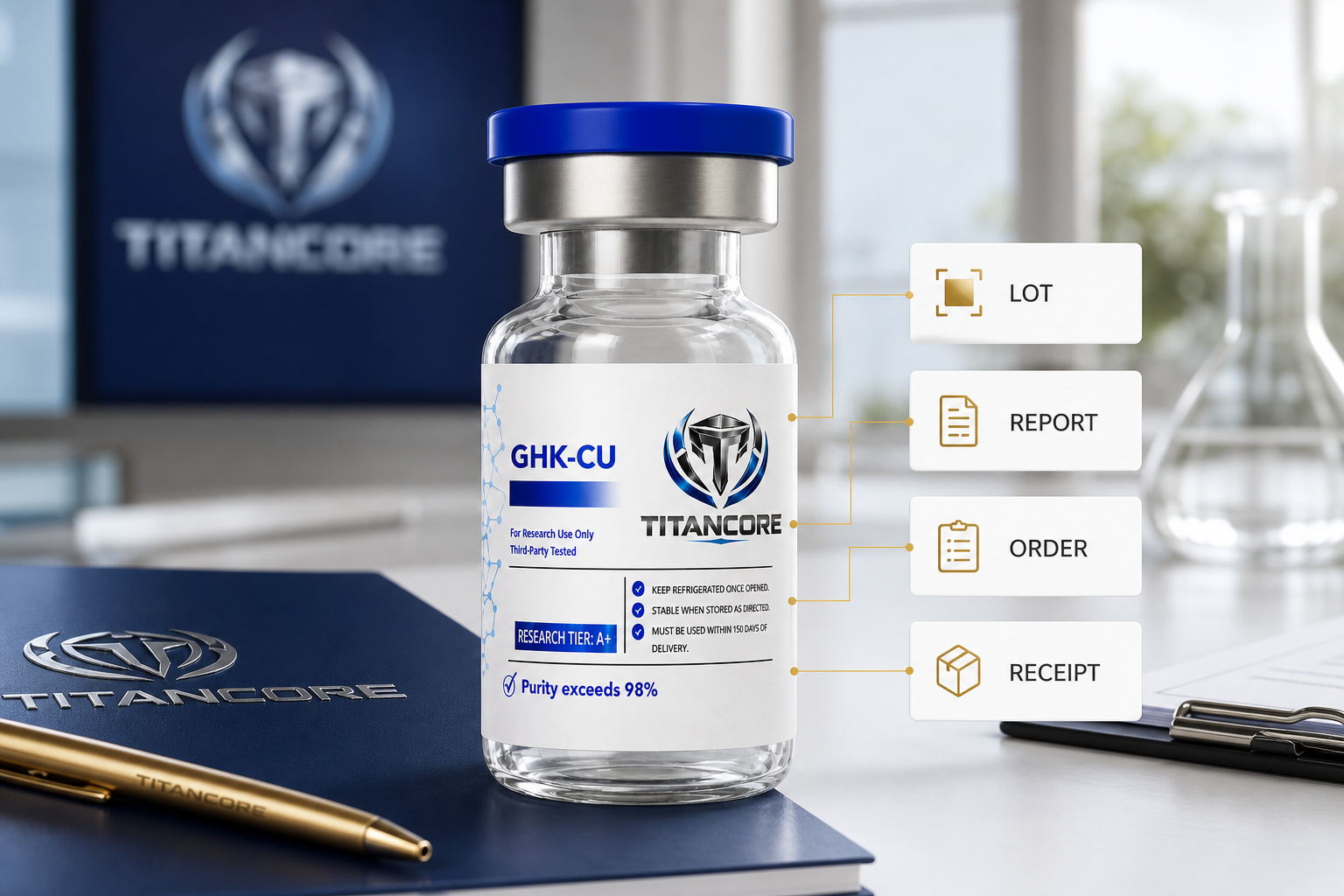
A certificate is useful only when a reviewer can connect it to the material under review. The bottle label and lot identifier are the bridge between the physical item, analytical record and commercial transaction.
This is traceability at the point where buyers can see it.
What to capture from the label
Before ordering or at receipt, record:
- supplier and brand;
- product name;
- stated format or amount;
- lot or batch identifier;
- catalog or SKU reference when present;
- storage or handling statement;
- expiration or retest information when present; and
- restrictions and warnings.
Photographs should be sharp enough to read those fields. An attractive bottle image without legible identifiers has limited value for quality review.
Match identifiers across records
Build a simple cross-reference:
| Record | Identifier to capture | Expected match | |---|---|---| | Product page | Product/SKU | Order line | | Bottle label | Lot/batch | Certificate | | Laboratory report | Sample/lot/report | Supplier mapping | | Order confirmation | Product/date/quantity | Receipt | | Receiving record | Delivered lot/count | Approved order |
If one system uses a sample number and another uses a supplier lot, document the mapping. Do not assume they refer to the same material.
Traceability is a chain, not a logo
A logo, QR code or “verified” icon may help users navigate, but it does not create traceability by itself. The link must lead to a controlled, readable and relevant record.
If a QR code changes destination, Titan Core should manage the update and preserve a record of which page or file applied at the time of sale.
What to do when the lot changes
When new inventory arrives, current-lot information and documents should be updated. Historical reports may remain in an archive, clearly labeled with lot and status.
Product content should avoid permanent promises based on a single past lot. Use current evidence or describe the documentation process instead.
Receiving is part of the evidence system
At receipt, compare:
- package and unit count;
- product name and format;
- lot identifier;
- label condition;
- documentation supplied; and
- visible shipping or damage issue.
Record discrepancies promptly. Include the order number, product, lot and photographs when contacting support.
Traceability does not replace suitability review
A perfectly matched record does not mean a material is appropriate for every project. Institutional approval, risk review, protocol fit and the scope of analytical evidence remain separate questions.
Traceability answers, “Which material does this record describe?” It does not answer every scientific or legal question about the material.
Titan Core's customer-facing standard
For Titan Core, the ideal experience is:
clear product page -> readable label -> current lot -> accessible evidence -> responsive support -> documented receipt.
That chain supports both brand trust and operational quality. It is more persuasive than vague claims because the buyer can follow it.
Ask a documentation question
Contact Titan Core with the product URL and ask for the current lot and matching record. Then use Why lot-specific documentation matters for the review.
Sources and further reading
- NIST: Metrological Traceability
- OECD: Good Laboratory Practice and data integrity
- Related: COA-first procurement checklist
For research procurement, receiving and record-review purposes only.