
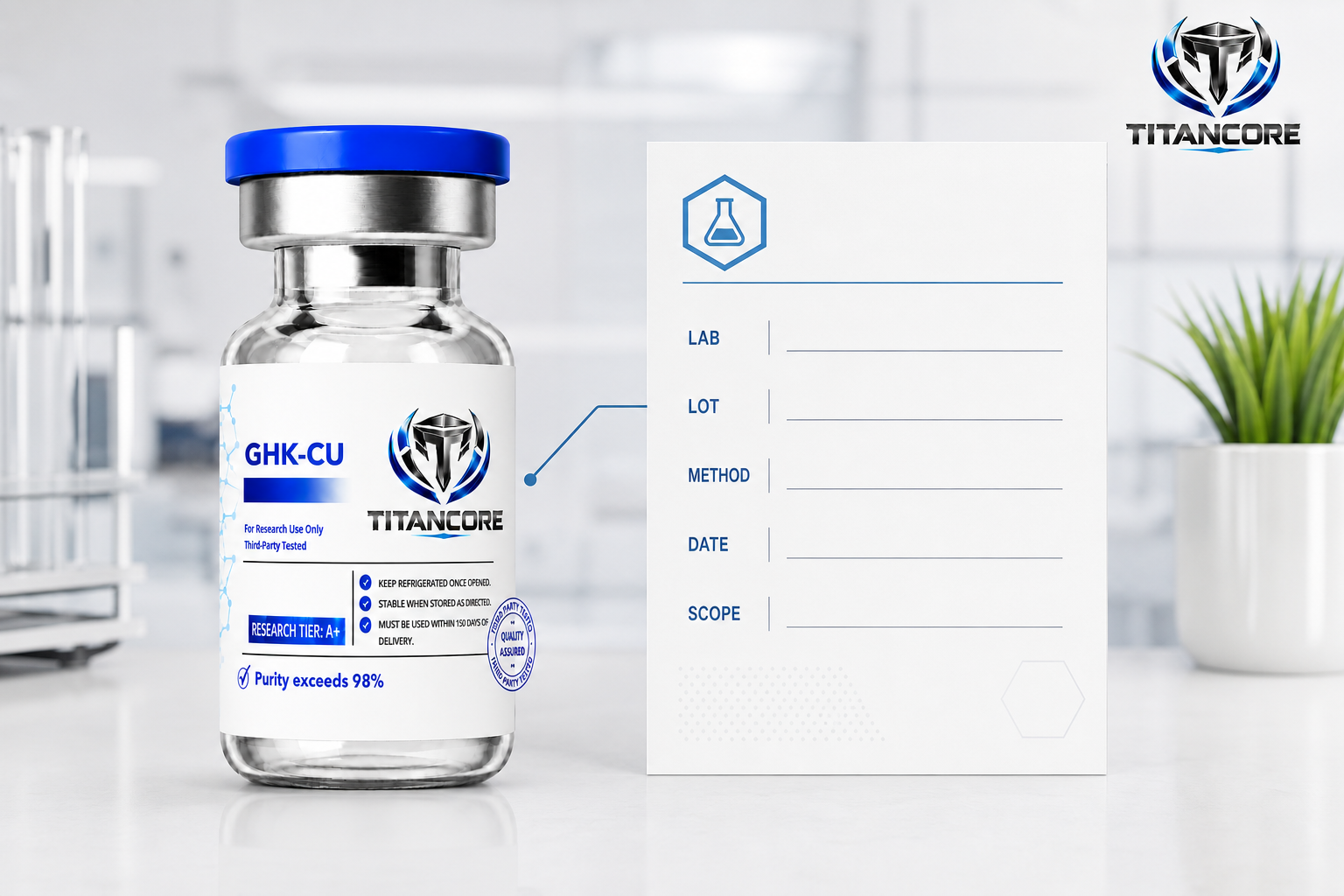
“Third-party tested” can be a useful starting claim. By itself, it does not tell a buyer who tested the sample, which lot was involved, what method was used or what the result established.
A credible supplier should make the evidence behind the phrase easier to inspect.
Define the third party
Identify the laboratory or organization that performed the work. A readable report should normally provide a name, report identifier and enough context for the reviewer to understand who issued it.
Independence is not created by hiding the lab. If confidentiality limits what can be displayed publicly, the supplier should explain what can be provided to qualified buyers and through which support route.
Connect the test to the current lot
The phrase matters most when the report connects to the material being considered. Compare the lot or sample identifier across:
- the product page;
- current inventory information;
- bottle label;
- laboratory report; and
- order or receiving record.
A report for a historical sample should be labeled as an example, not presented as current-lot evidence.
Name the method and result
“Tested” describes an activity, not a conclusion. The page or linked document should show what was evaluated, the method used, the result, units and relevant qualifiers.
For example, HPLC and mass spectrometry may support different analytical questions. One should not be used as a generic substitute for the other.
Preserve scope
If the report addresses chromatographic purity, say that. If it supports identity based on mass information, say that. Do not expand either finding into blanket claims about sterility, safety, efficacy, quantity or suitability.
The purity percentage guide shows why a strong number still has limits.
Make the document readable
A trust badge beside an unreadable thumbnail is not transparency. Qualified readers should be able to review the report at a practical resolution, including pages, dates, identifiers and signatures.
Good publishing practice includes:
- accessible PDF or high-resolution image;
- descriptive link text;
- clear “current lot” or “example” status;
- revision date;
- privacy redactions that do not hide critical evidence; and
- a support contact for questions.
Ask how the sample reached the laboratory
When it matters to the decision, ask who selected and submitted the sample, which identifier the laboratory received and how results were returned. This provides context for independence and traceability.
The answer does not need to become marketing copy. It should be available for quality review.
Avoid invented certification language
Terms such as “lab certified,” “pharmaceutical grade,” “guaranteed” or “clinically proven” may imply far more than a report establishes. Use only language that legal and quality teams can map to current evidence.
Titan Core's strongest message is not the loudest badge. It is a clear path from claim to document.
The seven-part proof test
Before accepting “third-party tested,” identify:
- laboratory;
- product and sample;
- lot or batch;
- test date;
- method;
- result and units; and
- scope and limitations.
If any element is missing, ask for clarification rather than guessing.
Review Titan Core standards
Visit Titan Core Quality Standards for the current public position. For a lot-specific document, contact Titan Core.
Sources and further reading
- FDA: Q2(R2) Validation of Analytical Procedures
- NIST: Metrological Traceability
- Related: How to read a peptide COA
For research procurement and evidence-literacy purposes only.