
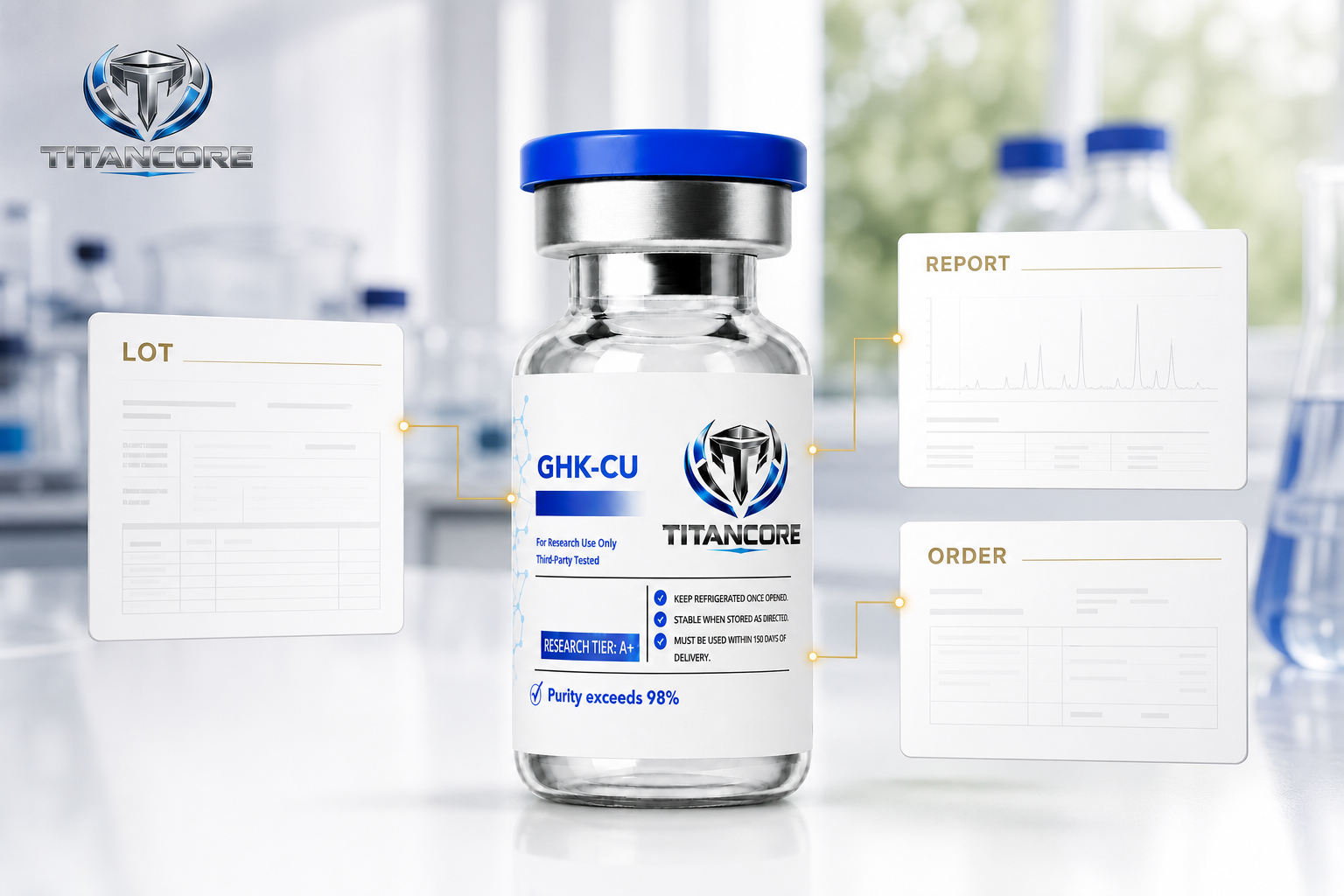
Two bottles can share a product name and still come from different lots. Lot-specific documentation is what helps a reviewer connect the actual material being offered or received to the record being evaluated.
Without that connection, a certificate may be informative about a product type or historical sample but not conclusive about the current order.
What “lot-specific” means
A lot-specific record contains an identifier that can be matched to the label or controlled commercial record for the material under review. The connection may involve:
- product name;
- lot or batch number;
- sample identifier;
- supplier catalog reference;
- laboratory report number; and
- order or receiving record.
The identifiers do not need to be identical in every system, but the mapping should be explicit and documented.
Why an example COA is different
An example COA can show what a supplier's report format looks like or what testing has historically been performed. It should be labeled “example,” “representative” or “historical” when it does not apply to current inventory.
The problem is not that examples exist. The problem is presenting an example in a way that makes a buyer reasonably believe it covers the item about to ship.
Build the evidence chain
Use this chain:
- Product page: exact item and format.
- Inventory record: lot expected to fulfill the order.
- Bottle label: lot on the physical item.
- Analytical report: lot or mapped sample identifier.
- Order record: date, quantity and product.
- Receiving check: confirmation that the delivered item matches.
Keep the documents together so the decision can be reconstructed later.
What lot linkage does not prove
Traceability strengthens the relationship between an item and a record. It does not guarantee that every quality attribute was tested or that the material fits a proposed protocol.
Reviewers still need to examine method, result, units, scope, dates, laboratory information and unresolved attributes.
Questions for suppliers
Ask:
- Which lot is currently available?
- Does the displayed certificate apply to that lot?
- How does the report identifier map to the bottle label?
- When was the sample tested?
- Has the report been revised or superseded?
- Will the same lot fulfill my order?
- How should a mismatch be reported?
A precise support response is part of the trust experience.
Questions at receipt
When the item arrives:
- photograph the label and lot;
- compare it with the approved documentation;
- confirm product, format and unit count;
- check visible package condition;
- retain the order and shipping record; and
- follow the buyer's hold or escalation process for discrepancies.
Do not quietly substitute a document for another lot because the product name looks the same.
Titan Core's responsibility
Titan Core should make current lot status and document status clear on the product page or through support. Historical records should be distinguished from current ones, and replacements should be version-controlled.
This is how “Research. Quality. Integrity.” becomes a measurable practice instead of a decorative phrase.
Ask about current documentation
Use Contact Titan Core to request the current lot identifier and matching record for the exact item being considered. Then use the COA-first procurement checklist to document the decision.
Sources and further reading
- NIST: Metrological Traceability
- OECD: Good Laboratory Practice and data integrity
- Related: Labels, lots and traceability
For research procurement and record-review purposes only.