An established company can point to years of transactions and operating history. A new company has to build trust differently: by making the current experience clear, verifiable and responsive from the beginning.
Titan Core is a new research-focused brand. The most credible way to say that is directly - then show the systems being built around it.
Start with a recognizable, consistent brand
Client feedback emphasized using the same logo and related visual treatment rather than random variations. That direction matters because product recognition is part of trust.
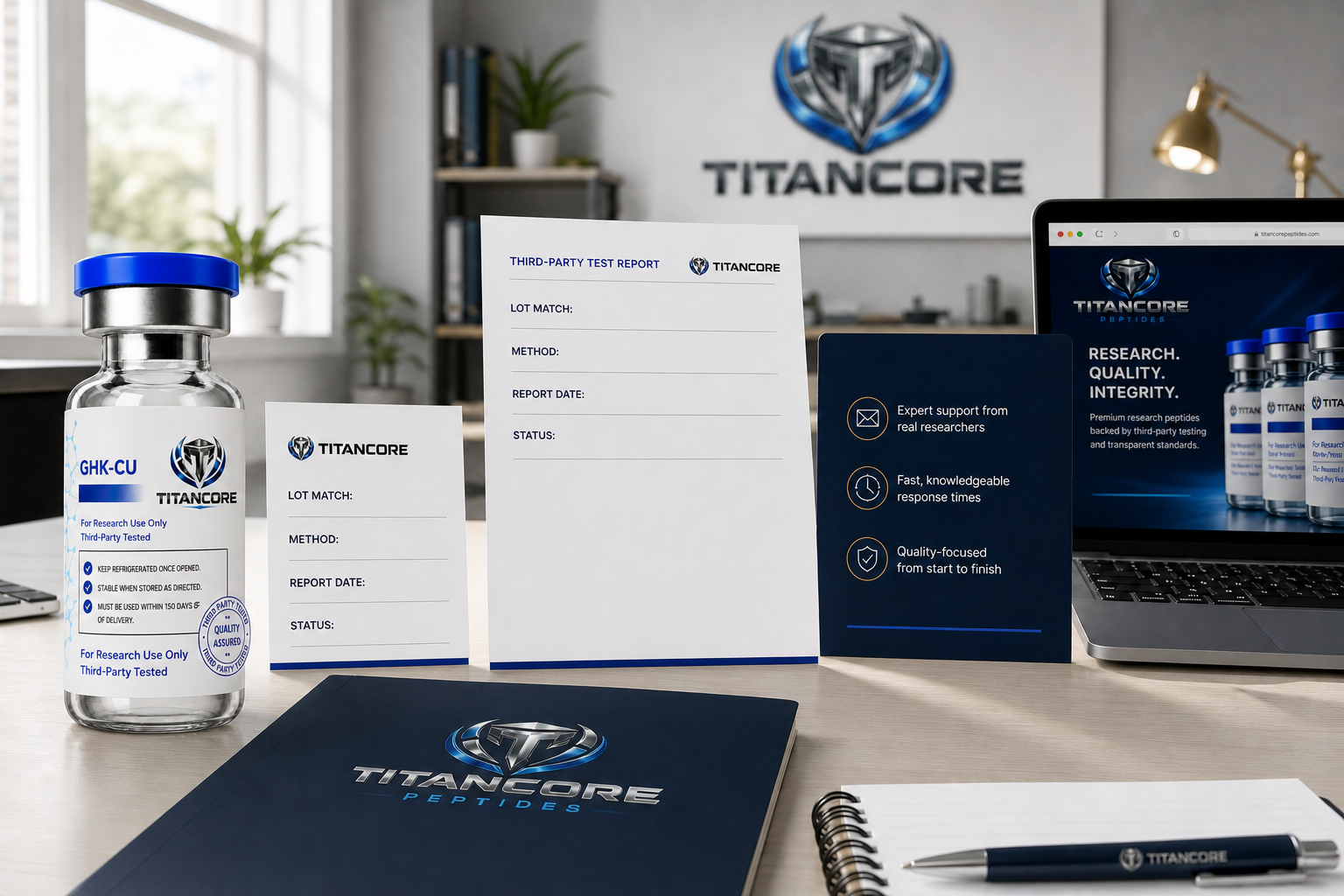
Titan Core's official system includes the metallic emblem, silver wordmark, cobalt blue and deep navy. Product imagery uses blue-capped bottles with consistent labels. The new resource library keeps those elements visible so a reader can move from a social post to an article to a product page without wondering whether the content belongs to the same company.
Make the company easier to evaluate
A polished site can create a strong first impression. Evaluation begins when a buyer looks for specifics.
Titan Core's trust roadmap includes:
- a clear About page with accurate founder and company information;
- stable product and catalog URLs;
- unique product descriptions;
- lot-linked documents where available;
- accurate quality, shipping, payment and return language;
- an accessible Contact path; and
- a Research Resources library that answers real questions.
The work is connected. A useful article cannot compensate for a broken product route, and a beautiful product image cannot compensate for unclear documentation.
Treat “pending” as useful information
New suppliers often feel pressure to make every field look complete. That can create more risk than confidence.
If a current lot document is pending, say pending. If an item is unavailable, say unavailable. If a route is under repair, do not describe it as live. Clear status gives the buyer a real decision point and gives the internal team an owner for the next action.
This approach is explored in Why lot-specific documentation matters and What third-party tested should mean.
Let content answer the next buyer question
The first version of Titan Core's blog library leaned heavily toward institutional procurement language. Those topics were useful but did not fully introduce the company, the founders or the products.
The redesigned library follows a more natural journey:
- Who is Titan Core?
- Who is behind the company?
- What products are currently featured?
- What does published research say about those compounds?
- What should a qualified buyer verify before an order?
- How can the buyer contact the company?
That sequence supports discovery and trust without turning education into a disguised personal-use sales pitch.
Put real support behind the content
Articles should not end in a generic “buy now” instruction. The next action should match the question.
- A founder story can link to About Titan Core.
- A product overview can link to the relevant intended product page.
- A documentation article can link to Quality Standards.
- An order or evidence question can link to Contact.
When the destination is useful, the CTA feels like service rather than pressure.
Measure the signals that lead to healthy revenue
Titan Core's goal is revenue, not content volume for its own sake. Blog measurement should therefore connect each post to business outcomes:
- qualified organic visits;
- clicks to a relevant product or company page;
- documentation and support inquiries;
- account or checkout starts after route repair;
- completed orders with accurate attribution;
- returning readers and customers; and
- repeat orders or qualified volume conversations.
Follower count and page views can provide context, but they are not substitutes for a working buyer journey.
A trust checklist for a new supplier
Before asking a reader to act, Titan Core should be able to answer yes to these questions:
- Does the page identify the company and product clearly?
- Does the language stay inside the research-only boundary?
- Are specific claims tied to current evidence?
- Do the links lead where the article says they lead?
- Can the reader ask a real person a relevant question?
- Is there a process to update the page when facts change?
That is how a new supplier begins building an operating history worth returning to.
Explore the Titan Core approach
Read Why Titan Core exists, visit About Titan Core and continue to How to compare research suppliers. If you need clarification about a product, order or current document, use the official Contact page.
Sources and further reading
- Titan Core
- Titan Core About
- Google: Creating helpful, reliable, people-first content
- Related: The Titan Core customer experience
For research and laboratory context only. This article does not establish product quality, availability, regulatory status or fitness for any particular use.