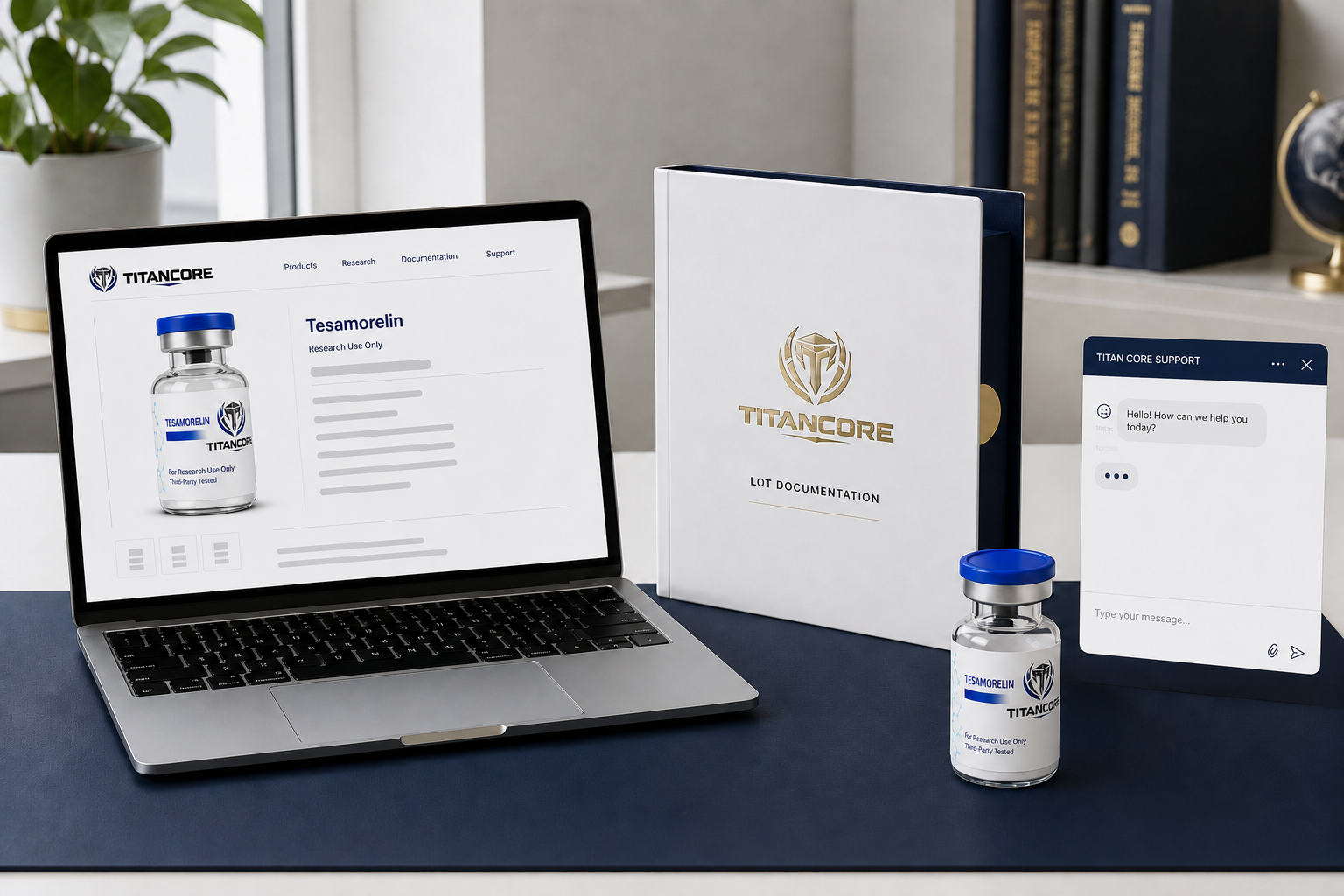
A research-product page should not operate as an isolated sales card. It should be the front door to a complete information system: exact product, current lot status, relevant evidence, commercial terms and a support path.
When those pieces agree, the buyer spends less time guessing and the brand earns trust through clarity.
The product page establishes the current offer
Every page should answer:
- What is the exact item?
- Which format or amount is offered?
- Is it currently available?
- What restrictions apply?
- Which claims are being made?
- What documentation is available?
- What happens after the CTA?
The title, image, URL and checkout item should describe the same product.
The document layer supports defined claims
Product pages should link to current lot-specific records when feasible, or explain how qualified buyers can request them. Each report should be readable and labeled with its status.
Avoid placing a generic certificate thumbnail beside every product. It may create the appearance of evidence without proving which record applies to which item.
The support layer closes real gaps
Not every question belongs on the page. Support should be able to answer current-lot, record, availability, shipping and discrepancy questions using consistent information.
The page should give support enough context. A contact form can pass the product URL, catalog identifier and question so the customer does not need to repeat basic facts.
The three layers must stay synchronized
Consider a product that sells out or changes lot. The product page, evidence status and support knowledge should update together. Otherwise:
- the page may advertise unavailable inventory;
- an old certificate may appear current;
- support may quote a different lot; or
- the order may arrive with records the buyer never reviewed.
A dated content owner and change checklist prevent those conflicts.
Titan Core's current route issue
At the 14 August 2026 audit, homepage cards for GHK-CU, Retatrutide and Tesamorelin pointed to intended `/shop/...` routes that redirected to the homepage. This breaks the path from educational article to product detail.
Before release, Titan Core should:
- restore each unique product page;
- verify the correct product and image;
- add current research-only and evidence information;
- test desktop and mobile routes;
- confirm checkout mapping; and
- retest all blog CTAs.
What a strong product page looks like
Use this order:
- product identity and research-only boundary;
- clear real product photography;
- format, availability and commercial facts;
- documentation status and lot information;
- method-specific evidence summary;
- shipping, return and support links;
- related educational resources; and
- qualified CTA.
The featured image should use the real Titan Core bottle and logo, not generic robots, pills, injections or body imagery.
How articles support the page
Articles should answer the broader questions that a sales page cannot handle well. For example:
- GHK-CU research overview
- Retatrutide documentation checklist
- Tesamorelin procurement checklist
- How to read a peptide COA
Each article returns the qualified reader to a relevant current page or support route.
Explore Titan Core
Visit the Titan Core website for current public information and contact the team for a product-specific question.
Sources and further reading
- NIST: Metrological Traceability
- FTC: Health Products Compliance Guidance
- Related: From first click to follow-through
For research-commerce, documentation and customer-experience education only.